The .com bubble
TCP/IP and the Internet
During all those years, computers have been gradually interconnected using different protocols. But the very protocol who defined the Internet was TCP/IP.
With TCP/IP, every computer has an unique address (IP) and can talk to any other IP address as long as their a route to it on the network.
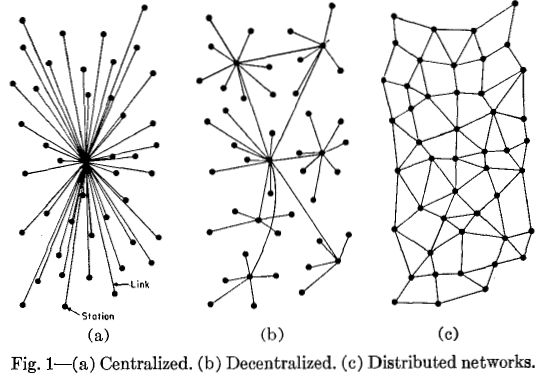
The architecture of the Internet is said to be "decentralized".
TCP/IP allows you to "talk" to another computer but there’s the need to define this "talk". Which is defined by upper-layer protocols: telnet, ftp, usenet, finger…
A computer support a given protocol only if there’s a software running on it and listenning to the port assigned to that protocol. The listenning software is often called the "server".
The problem of all those protocols was that you needed to know on which computer to connect. And IP were hard to remember.
DNS
The first solution was to use a HOSTS file on each system were you could give names to IP address.
For the record, this HOSTS file still exists on most system (probably on /etc/hosts on most Linux system). And you can still use it to give a name to a give IP.
In the eighties, sharing HOSTS files was seen as impractical an a whole protocol and structure was designed to give name then subname: the Domain Naming System (DNS).
It is still very complex to use and to configure correctly.
Authority were given to institutions/country to delegate "domain name" for their own extension (.com, .net, .fr, .be and, more recently, .eu).
But even if you had a good name for an IP, you still needed to know which protocol to use to connect to it, which login to use, where to find ressources like intersting files on a FTP server.
Gopher
In 1991, the Minnesota university design the Gopher protocol to allow "browsing the Internet". Gopher had a special kind of files called "Gopher maps" on which you could follow links to other ressources (which could be Gopher Maps themselves).
The main content was on TXT files but Gopher allowed multiple kind of formats as long as their was a code for it in the URL.
Gopher became quite popular in the USA, to the point where the Minnesota university started asking every Gopher server to pay a license for it.
The World Wide Web
Exactly at the same time Gopher was developed (and Linux), a British and a Belgian working on the border from France and Switzerland for an European institution (the CERN) developped an hypertext protocol. Hypertext was, at the time, all the rage. It was the idea to have link to other document inside the document itself. Something that Gopher, on purpose, was trying to avoid (Gopher had been designed mostly by and for librarian, who took pride into separating clearly the ressource itself from the classification of the ressource).
The Hypertext Transfer Protocol (HTTP) was designed to transfer document into the Hypertext Markup Language (HTML).
This illustrates that most protocol comes with a transfer protocol and a format protocol. The mail, for example, is SMTP/MIME. Gopher is Gopher/Gophermaps.
At first, the success of the Web was modest. When Tim Berners Lee gave a talk about it in 1993 at an HyperText conference, nobody really noticed. But, as unlike Gopher, it was fully free, it becames more popular. Gopher nearly disappeared.
Sidenote about standards
The winmail.dat debacle
Sidenote: the Gemini protocol
As a sidenote, it should be noted that Gopher remained active in a very small niche of afficionados who, to this day, still use it to write into their "gopher holes" (which is the gopher equivalent of a website) or on their "phlog" (blog for gopher).
One of those Gopher user, with the nickname "solderpunk", thought that Gopher was better than the Web because it was minimalist but maybe too minimalist. In 2019, he decided to creat a new protocol that would sit between Gopher and the Web. He called it "Gemini" (from the US Space program who was between the simple "Mercury" and the moon-landing-complexity "Apollo").
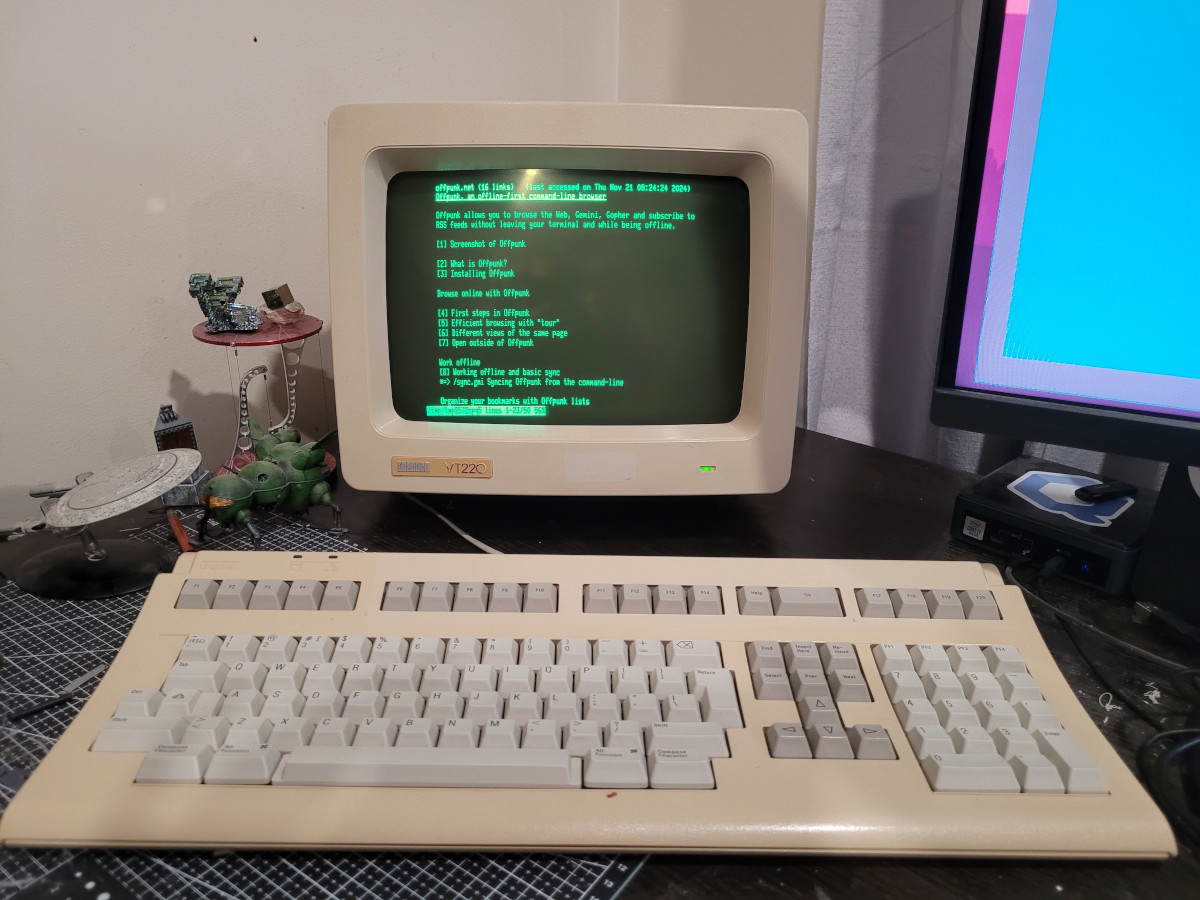
The Gemini protocol (not related to the Google Assistant, who came afterward) use "Gemtext" as its format protocol. A "capsule" is the equivalent of a website and a "gemlog" is a blog.
While still very niche, the Gemini protocol has now become more popular than Gopher. The content of this very website is available on the Gemini protocol. Install a Gemini client and browse to gemini://linfo2401.net
Netscape
To use a protocol, you need to connect to a server using a software called a "client".
...
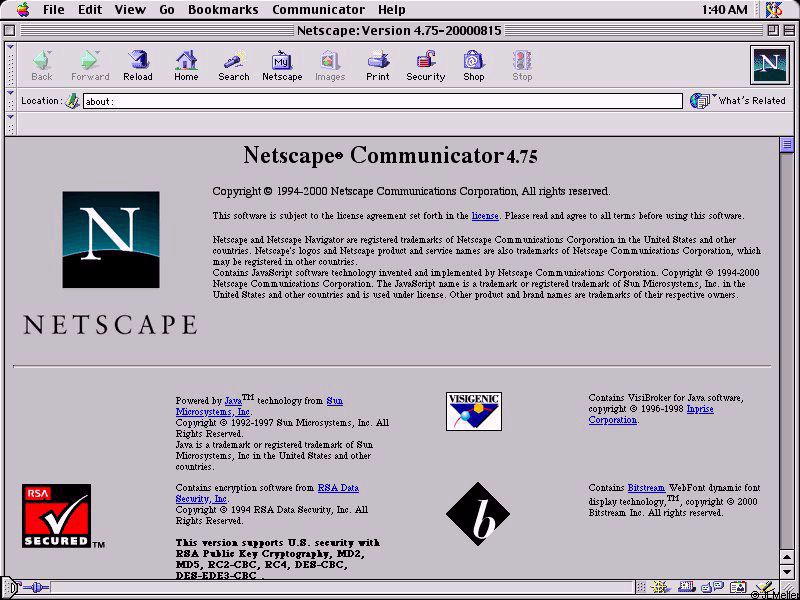
With Netscape, Marc Andreessen added the <img> HTML tag. It was not standard. But quickly became popular.
Mozilla
The .com bubble
Valuation, Yahoo, Google, Amazon…
pets.com
Free Software becomes Open Source
The problem with the "Free software" community was that the word "free" also means "gratis" and people don’t understand you can earn money with Free software.
Each year, I have students failing the exam for that reason: after a full course like mine, they still believe "free software" has to bee "gratis".
Am I such a bad teacher?
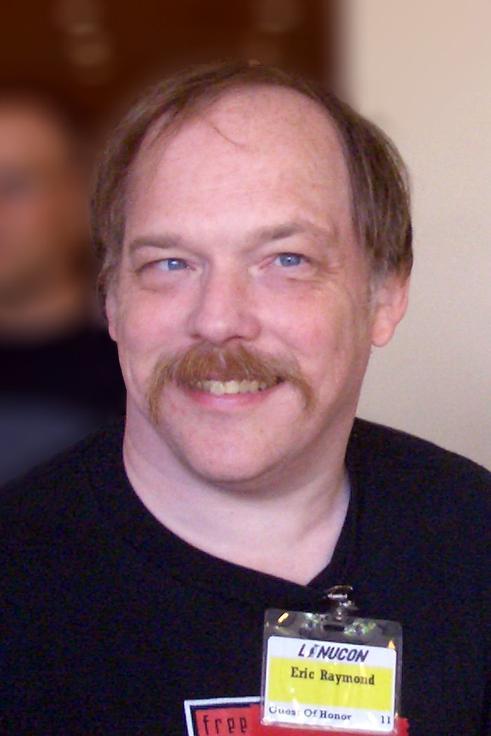
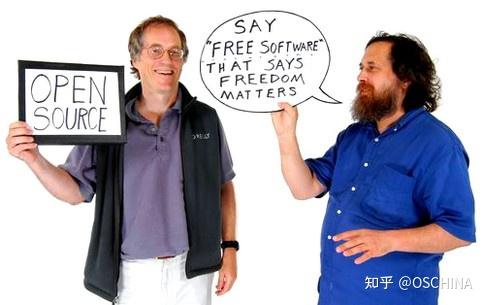
To fight this misconception, Eric Raymond (author of "The Cathedral and the Bazaar" and of "How to become a hacker") and Bruce Perens coined the term "Open Source".

Open Source would be just like free software. Without the word "free".
Also, Open Source software would not care about ethics or moral values. The whole point was to convince business people that Open Source was the best way to produce the best software because anybody could contribute, could check the code.
To promote that idea, they create OSI, the Open Source Initiative, which is still active to this day.
From my own experience, this was right. I’ve never witnessed really good code in proprietary project. Before the advent of generated code, every Open Source project leaned towards better code. This doesn’t mean that Open Source code is always goood. It means that the more people you have in a project, the older the project is, the more chance you have to have very good code and fewer "don’t touch this, nobody understands it".
But Richard Stallman was quite angry that the freedom was abandonned. He, rightly, predicted that dropping "free software" would create an ecosystem of "open-source in theory but restricting user freedoms". Future would proove him right and Bruce Perens would even admit that he regretted dropping the free part.
Many Open Source companies started to earn a lot of money. Instead of selling the boxed software like Microsoft, they sold support, certifications, course and, yes, sometimes even boxed software becausee people like it. The most famous being Red Hat which was producing a very popular Linux distribution (they still do and also produce the Fedora distribution). Red Hat later bought JBoss, which was a very popular J2EE server. It was said at the time that JBoss was, on purpose, overly complicated to ensure people would pay for support!
In Germany, there was Suse (now OpenSuse) and, in France, Gael Duval founded Mandrake (then Mandriva and now called Mageïa).
They all explored different business models. Mandrake as a "User Club" where you could, for a fee, get access to a community and exclusive contents.
Tim O’Reilly managed to build a huge business selling books about Free Software.