Typewriters and telegraphs
Many books about the history of computing focus on the "computing" aspect. Computing like in "crunching numbers".
While this is highly appropriate, I propose to focus on the computer as a "communication device". We cannot understand why computers are what they are now if we don’t go back to human wanting to communicate.
The most crucial invention of our human history is writing. By definition, writing invented the concept of history. It also invented the concept of "truth", "time" and "distance".
Before writing, there was no such thing at "telling the truth". You were sharing what you remembered, which was itself shared while being modified. There were no real notion of time other than "now" and "before now". Far away places were mythological beasts. You knew that someone talking about a distant place was telling you a story that could be inaccurate or plain wrong.
Writing changed the world and how humans see the world.
Suddenly, we started to have conversation with people, including ourselves, which were distant in space and time. Today, you can still read Plato, just like he was there, 3000 years later.
With writing came the concept of calendar, numbers. No need to remember: you had the proof that 38 days ago, there were 15 cows in your farm. You had the proof that, one month ago (the time needed for the letter to reach you), your brother was alive and going well.
No wonder that writing was seen as magical and that priests from most cultures tried to keep writing as a secret for an educated elite. Writing is incredibly powerful.
By being harder than speaking, writing forces to organize your thoughts. You can’t write "The sky is black but it is white". It doesn’t make sense. But a good orator can tell it and makes you nod at him for that. Speaking is manipulation where writing gives a lot of power to the reader.
That’s why it is important to read and write well. Tools that summarize for you are manipulating you. They make you dumber. Tools that write for you are manipulating your thougts. A simple "smart keyboard" that makes suggestion will change how you use words. How you appear for people reading you. And how you think yourself.
You can’t think if you can’t read and write by yourself.
But, for 5000 years, writing had a big problem: it was as slow as humans. Suppose that your fiancé took a job on a boat sailing from Europa to South America. During the travel, he would write you letters. Those would stay on the boat. Then, by random luck, the boat would cross the path of another boat doing the reverse journey. All the letters, sometimes written weeks ago, woul be given to that second boat. When the boat eventually board Europa, letters are given to the local post office and it takes another bunch of weeks before they arrive in your hand, months after they were written.
It is not a surprise that humans tried to transmit written messages faster.
The first successful attempt was called the "sémaphore". The idea behind the sémaphore was to have towers within sight of each other transmitting a message by moving huge wooden arms. Each tower would watch the message from the previous tower then send it to the next one.
It was really expensive, required lot of manpower but worked really well in France at the dawn of the 19th century.
In fact, because of France heavy centralisation and geography, it worked so well that French would not be interested in the next innovation that would take the world by storm: the telegraph.
The idea behind the telegraph is to transmit electricity over a wire. You send messages by transmitting electricity or not according to a code. We can see that the use of electricity automatically bring a binary mentality. The current is on of off. There’s no intermediate position.
The most famous code that was invented to be used over electricity is the Morse code.
What is so beautiful about Morse code is that it was really easy to implement : a simple switch that you would press or not to enable the current to flow.
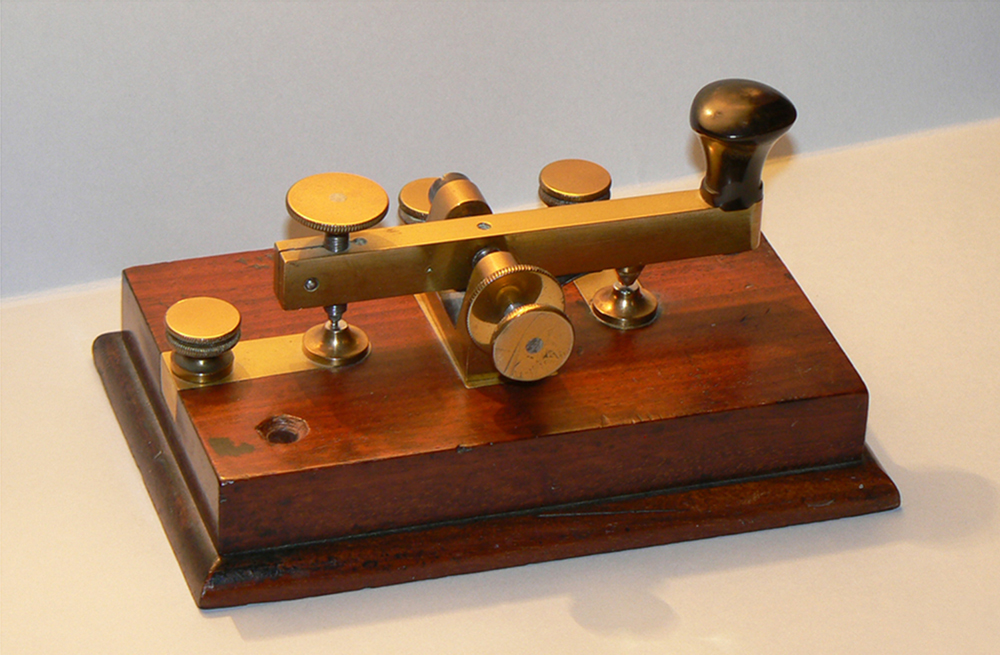
But something unexpected started to happen. Telegraph operators became so good with Morse that they became fluent. They were tapping morse at the speed of their thoughts. During slow times, they started to chat with each other over the wire. They played chess. They quickly recognized each other only by the way the letters were tapped. They even started long distance relationship.
And, as submarine cables became a robust technology (after many failed attempt), the world became connected. Any messages could reach any part of the world in a couple of hours.
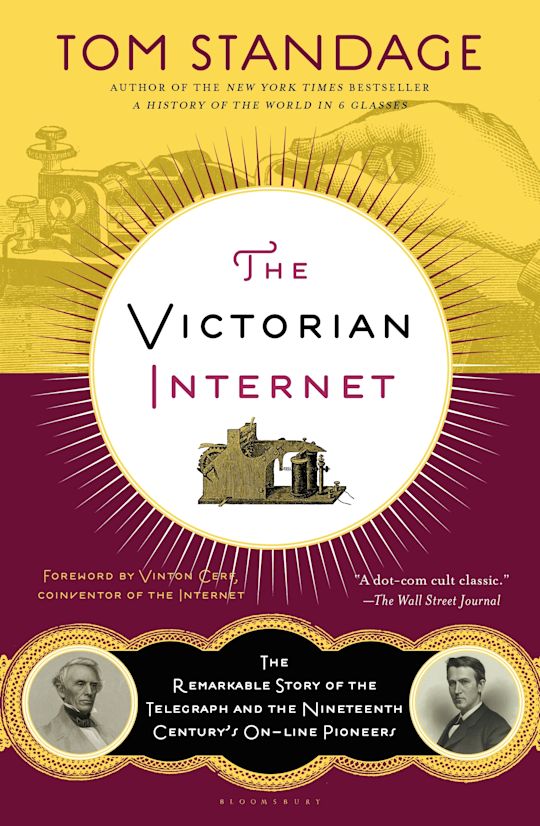
While the Morse code is easier for the operators, it’s hard to mechanize it. The reason is simple: Morse is not binary. You need the short, the long, the short silence, the long silence. Humans are very good at understanding Morse. Machine are not.
Émile Baudot suggests a new code, which is easy to mechanize. Each letter will be converted to 5 dot and each dot will either be a hole (current on) or not (no current). The use of punched paper was already a very old technology used for decades or centuries to store information. It was pioneered by looms, used in mechanical pianos, for census machines.
This is quite important to note because that will have a deep impact on computers.
But note that Baudot is the first binary code used to transmit text.
Baudot code was on purpose an odd number to not be confuse by the orientation of the five dots you were looking at.
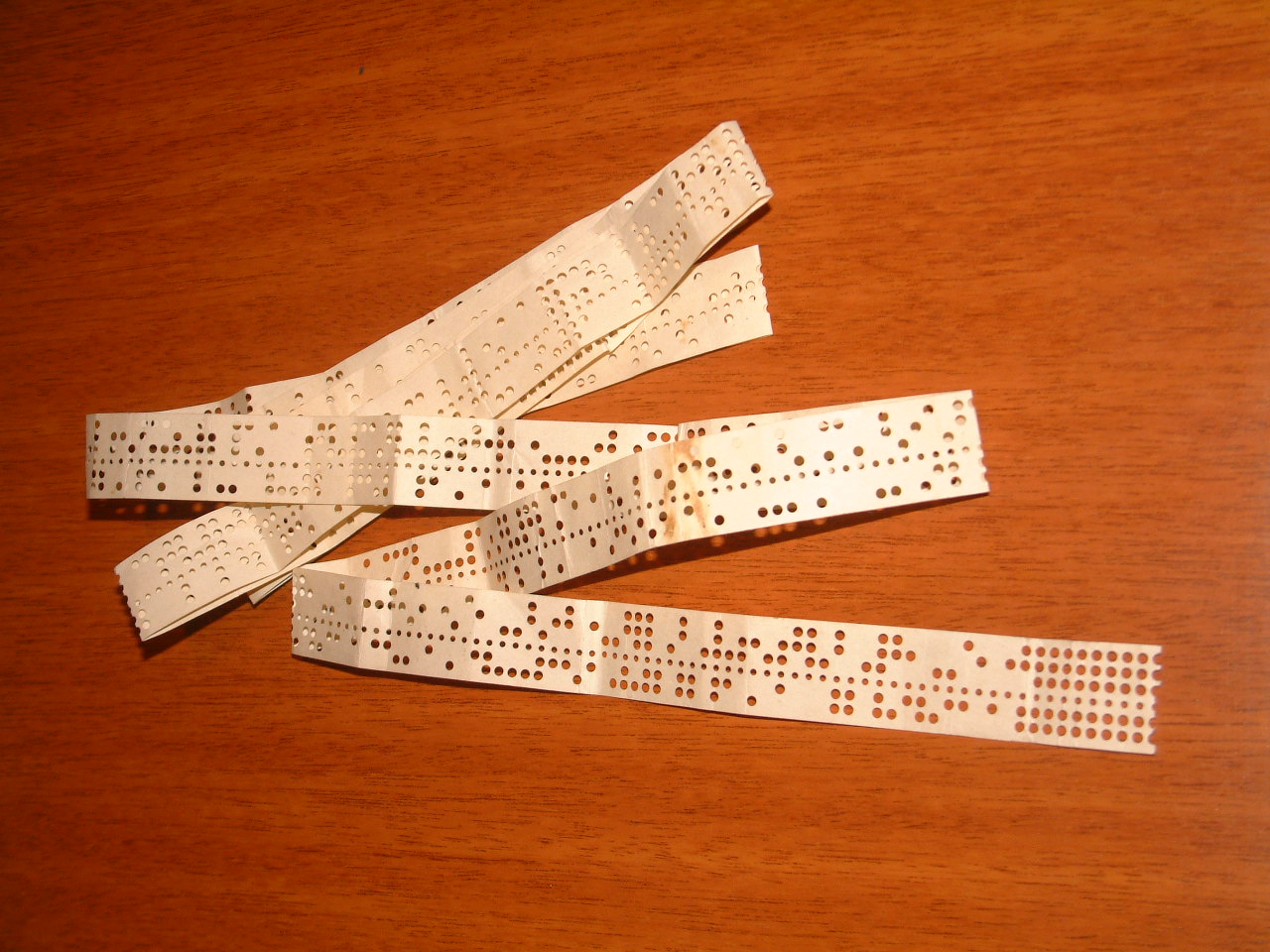
As there were five dots, there were 2^5 = 32 letters. Which is not enough for the latin alphabet, the numbers and some punctuation. Baudot code thus had two layers, with a code to switch between them.
Baudot code was heavily used during World War I.
Typewriters
More or less at the same time, a guy nammed Sholes invent a machine to help write good looking documents : the typewriter. Before the typewriter, documents were either handwritten or printed. Printing was a huge revolution as it allowed a large audience for books. Once a page has been "composed", you could print it thousands times without breaking a sweat.
But the compositing process itself was cumbersome and very expensive. Handwriting was how everything was written.
The typewriter intended to solve this problem by offering something not as fast as handwriting but very readable and standardized. Perfect for administrative documents.
There was many attempts at a "writing machine", with different technologies, different keyboards. The one from scholes is the one who stand out.
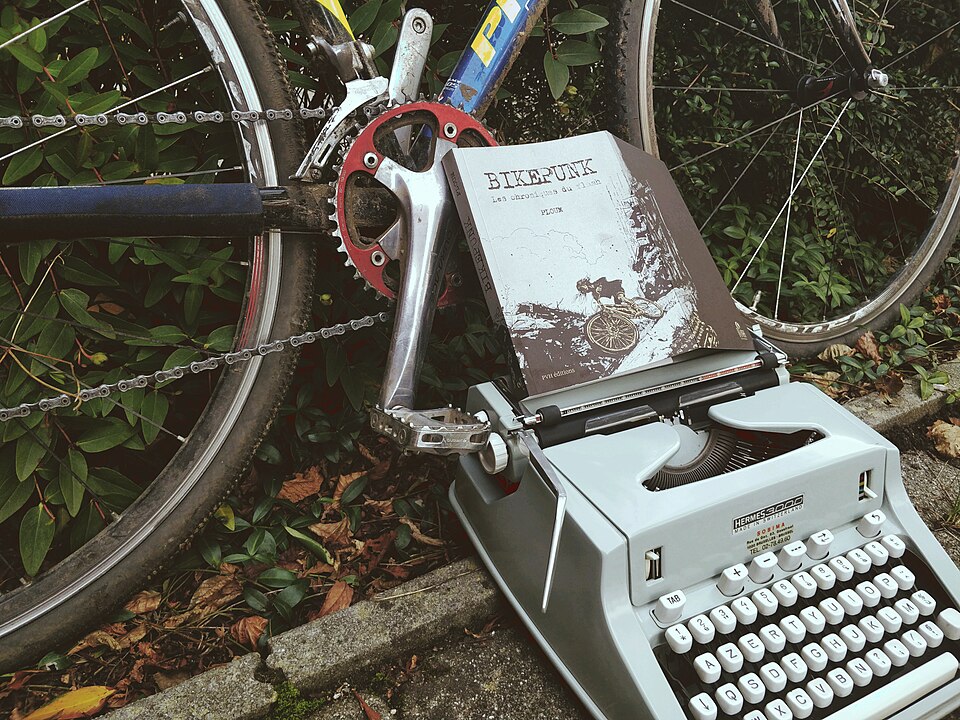
It had a huge impact and we still rely on arbitrary decisions made by Sholes. The letter on the keyboard were not aligned. It was not on purpose but because of the technical constraints of the levers. Also, the first demonstration model was deffective and letters were often jammed. While working on a fix, Sholes randomly mixed the letter to avoid to frequent use of letters next to each other. That would temporory hide the deffect.
The deffect was fixed in the next version but the salesman working with Sholes refused to place the letter back in alphabetical order. Doing that would recognize that items already delivered were deffective. Customer would not be happy to learn they have bought a deffective machine.
And that’s why we are stuck with a nearly random non-aligned Qwerty keyboard.
There’s no historical answer as to why that keyboard layout was randomly changed in different countries. While it is obvious that some adaptations were made for specific characters, the most plausible explanation for Azerty, Qwertz and others is that this was a commercial protection to avoid that people import their own typewriters from other countries.
This is also probably why, with the advent of personal computers, IBM would made the situation even worse. The belgian Azerty, for example, subtly differ from the French one.
Typewriters were the symbol of administrative tasks and formal documents. Office were full of the noise of typewriters. Nothing glamourous at all.
But, as for the telegraph, something unexpected happened: people where learning to type fast. Very fast. Especially women who were hired at typists.
It was so fast and effective that many writers would abandon the longhand to directly write on a typewriter: Nietzshe was one of the first. But Steinbeck and Hemingway are probably the most famous.
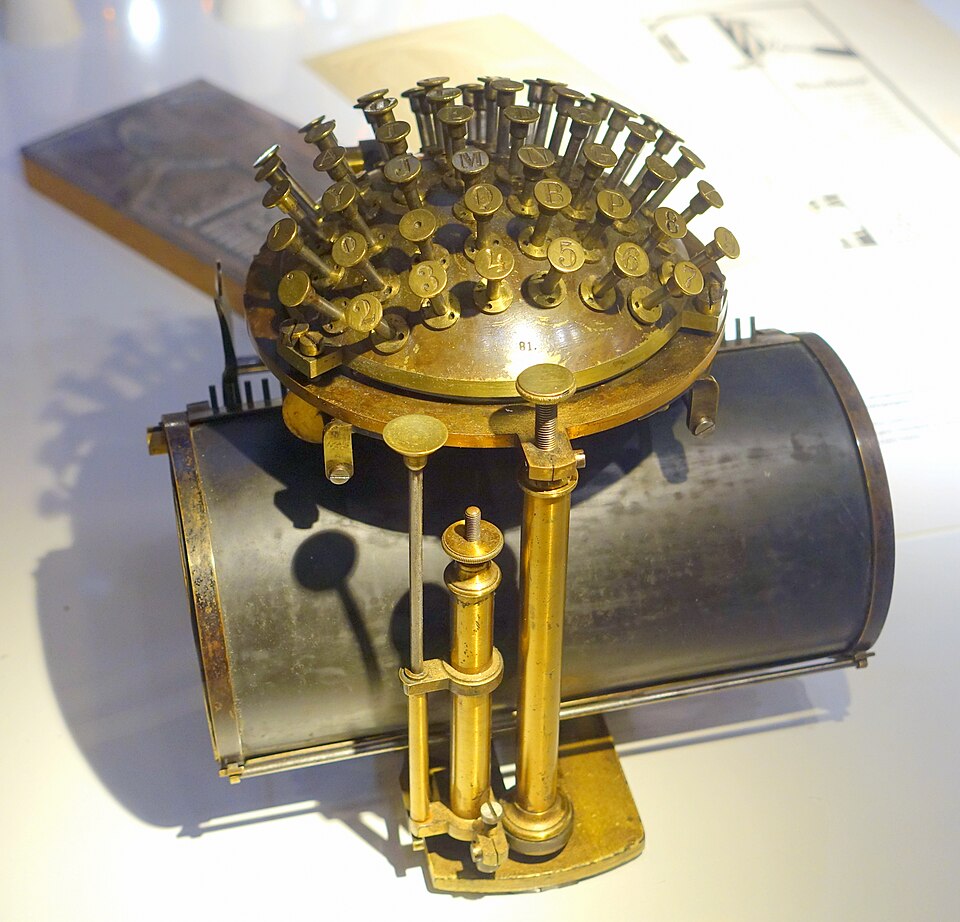
The tool modified the way they wrote, the way they thought. It is particularly notable for Nietzshe as we can compare his text written by and and his typewritten text. (Nietzshe was not using a Sholes typewriter, as it didn’t existed yet. He was using some other writing machine prototype).
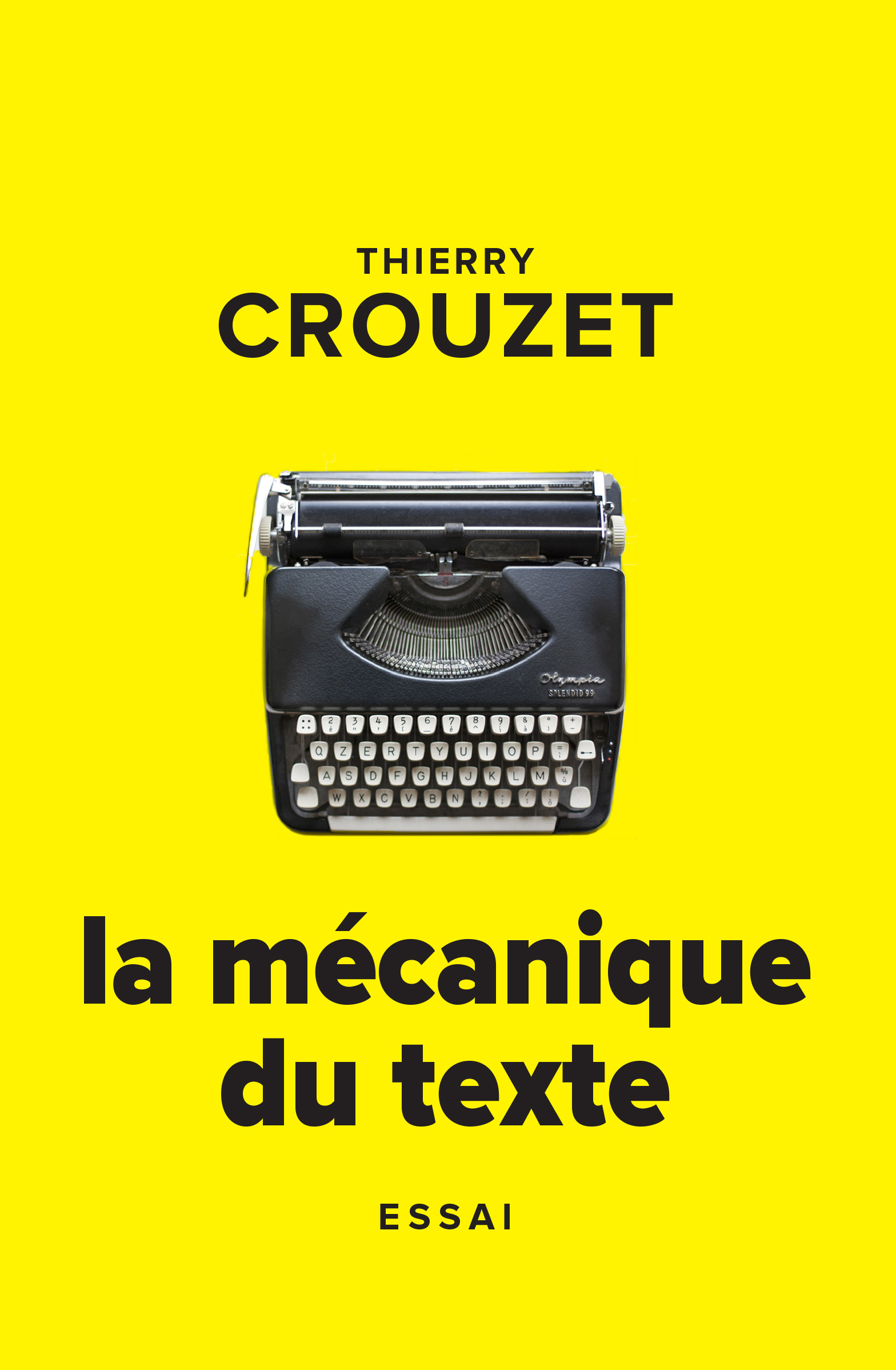
It is very important to understand how our tools affect the way we write and then think. French author Thierry Crouzet analyzed this in his essay "La mécanique du texte".
August Dvorak tried to fix the mess that the Qwerty keyboard was. He proposed a keyboard layout that was easier to learn, way faster and less prone to jamming. The fastest typed text ever was done on a Dvorak layout.
But this was a commercial failure because people were already used to Qwerty.
Some countries, like Portugal, intrdocued their own Dvorak-like layoud that proved to be popular.
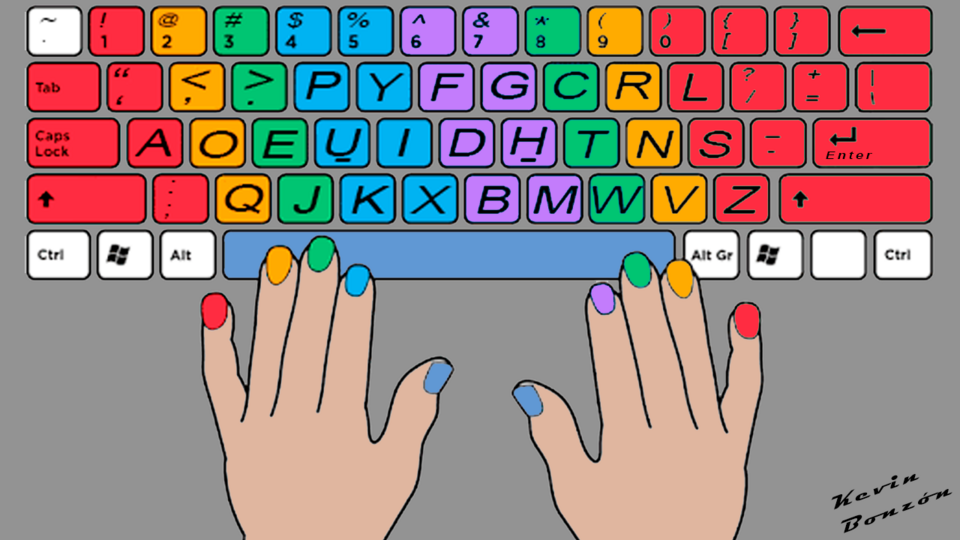
If you are serious about writing on a keyboard, learning to touch type is the best investment you could ever to. Anyone serious about using a computer should spend some type to learn real dactylography. And no, if you didn’t learn it correctly, you are not as fast and precise as you think. Chances are that you are censuring your own thoughts because typing is more painful than it should.
And if you are learning touch typing, learning a layout optimized for your language is probably a very good investment.
The Dvorak methodology (which was adapted in the "Bépo" layout for French) was trying to optimize alternating hands and finger movements. A new methodology came more recently, with the goal of minimizing even more finger movements and maximizing "rolls" instead of alternating hands. This gave birth to Colemak (English) and Ergo-L (French)
Teletypes
We have wire connecting places around the world (telegraphy). We have keyboards allowing to type messages.
The obvious idea that came was: What if we connect both together?
Well, this was the teletype. A typewriter combined with a phone would be plugged into a telegraph line. You had first to compose the phone number then, once connected, you could type your message. Letter would be converted to Baudot code and transmitted and automatically printed on the receiver side.
Most teletypes were part of a network called Telex.
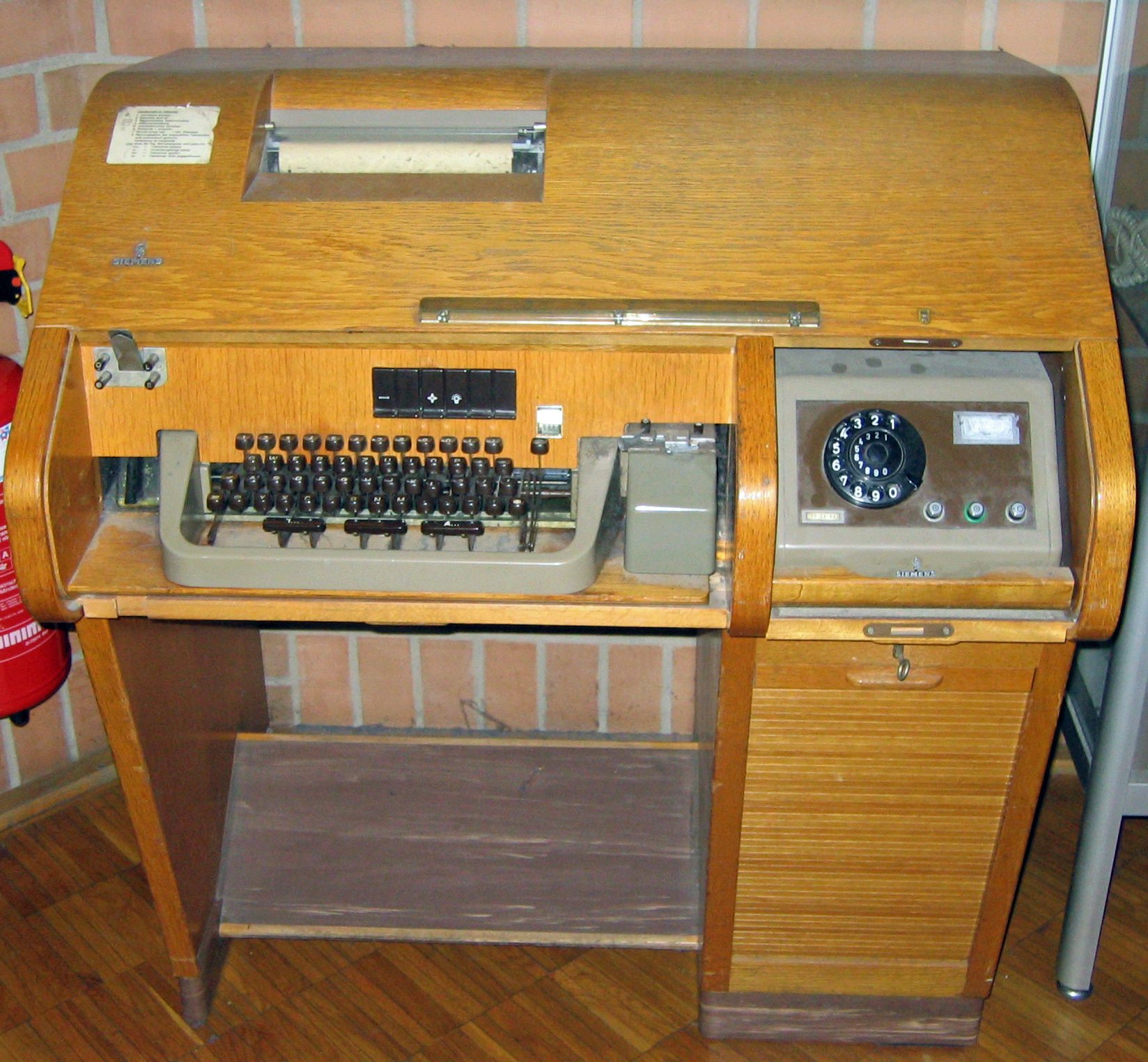
Remember: there was no such thing as a screen!
To not waste time (it was costly), messages were often composed beforehand on Baudot paper that you could feed to the machine.
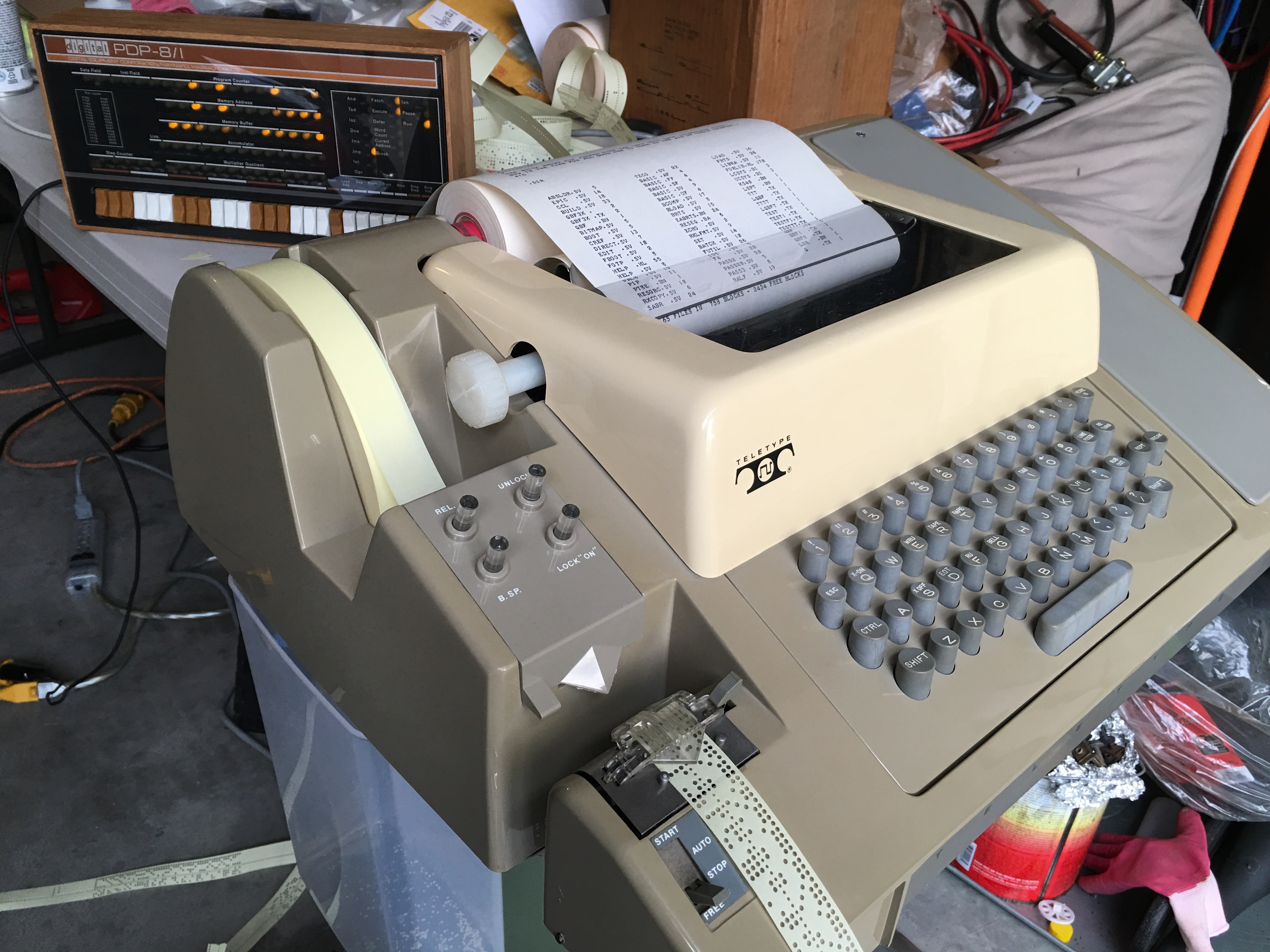
Teletypes were heavily used by the Germans during World War II and gained a lot of popularity after the war. The main use for the general public were Telegrams. You would enter a post office, write a message, paying according to the number of words. The operator would then take your message and type it to be sent to the post office of the destination. There, messengers (often young boys), would take the message and bring it to the final recipient.
In France, it was printed on blue paper, earning the name "petit bleu". As you were paying by the words, telegrams were often short, consise and using the terme "stop" (which was free) between sentences (there was no punctuation).
A lot of books and comics of the second half of the XXth century revolves around mysterious telegram or heroes having not enough money and forced to be creative to send their message in very few words.
The telex network was also heavily used by press agencies. The network had its peak popularity in the 90’s and the last telex operator were only stopped after 2020.
The first computer and wired programming
It is important to remember that all of this was not about computers. Computers didn’t exist. Transistors didn’t exist. Everything was done with mechanics and straight electricity.
The computers themselves famously appeard during WWII to crack the famous Enigma code of the germans. The Enigma machine had rotors that would move with each key press, translating every letter to another one but without relation to other letters.
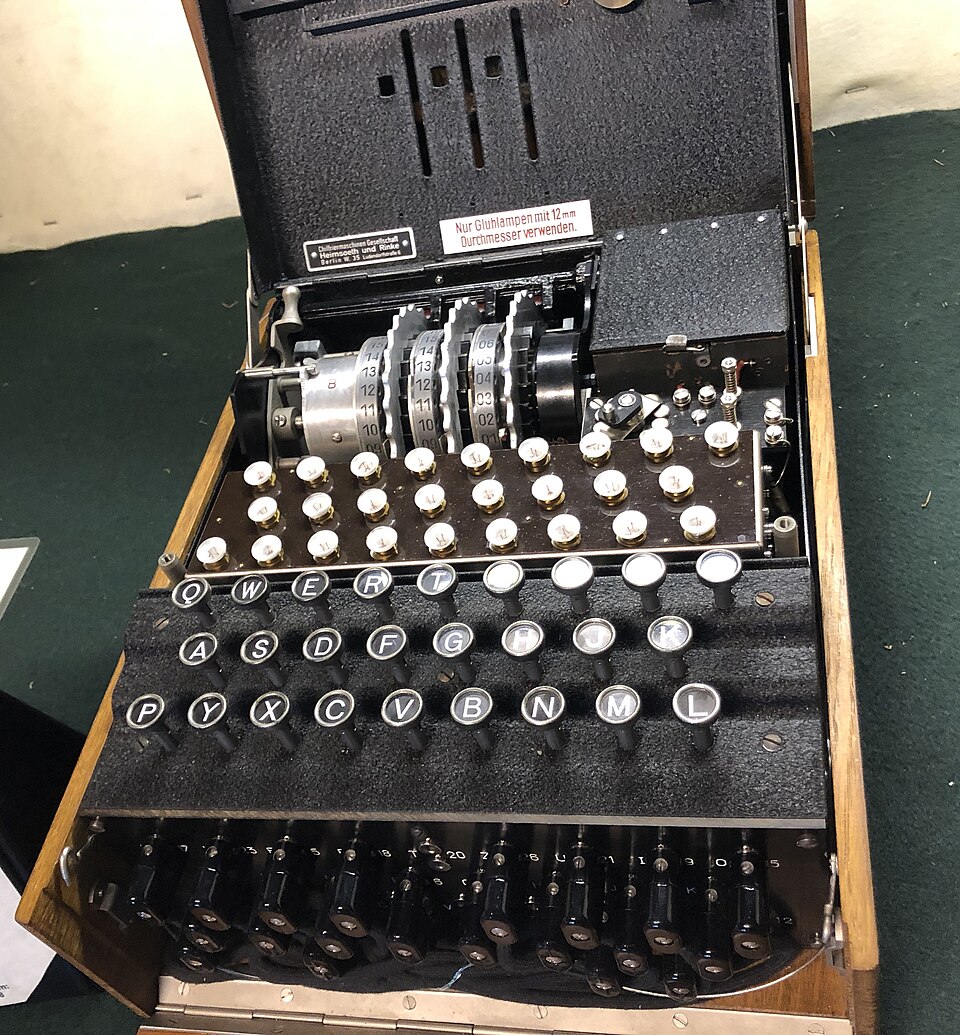
Of course, two communicating Enigma had to have the same initial settings. Those setting were changed daily and known in advance by officers. But the initial setting was often used only to transmit a new random setting that would be used for that specific transmission.
This means that intercepted messages were full of garbled text with billions of billions of potential combinations. There was no way to crack a message but to run it through all the potential settings of an Enigma machine.
This took a loot of time and, as the key were changed every day, it was often too late when a message was decrypted.
To solve this, Alan Turing and his team would build what was the first "computer". Its task was to run a message through all the potential combinations of Enigma until he had found a known word. Allied were helped by the fact that weather predictions always started with the same words.
But don’t believe it was a programmable computer. Changing anything about how a computer worked required to disconnect cables and plug them elsewhere. This technology would continue after the war.
In France, Marion Créhange was the very first person to receive a PhD in computer science. She liked to remind people that, at the time, programming was a job at pulling cables and she often had her hands injured. The "program" was the way the cables were connected.
Cables were replaced by small resistors and jumpers. To remember how to place them for a given function, you would take a cardboard and plug hole where the jumpers needed to be inserted.
The data were provided mostly on punched cards, which was inherited from census machines.
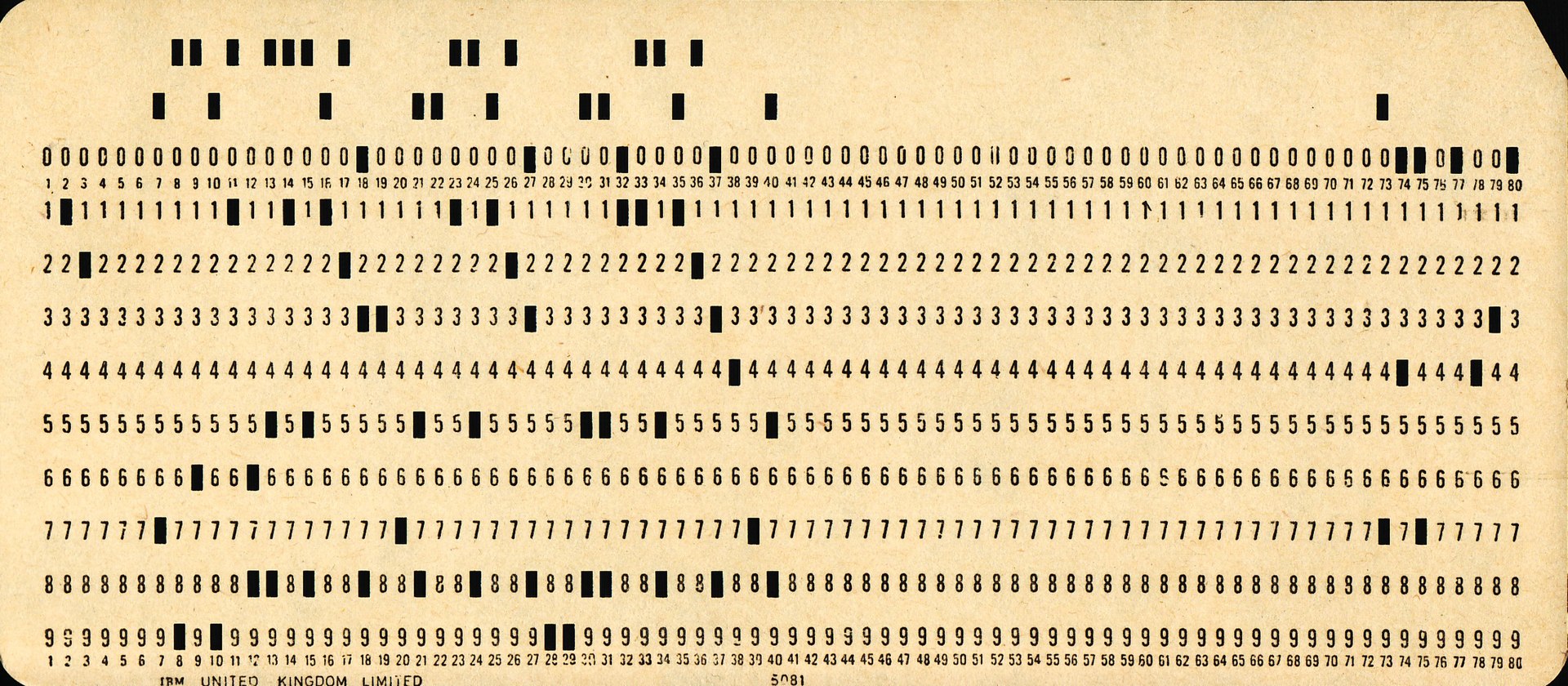
The punch cards and batch programming
Computers were using vaccuum lamps. You hade three connections: input, ouput and a modulator which allowed to control how much current from the input was transmitted to the output.
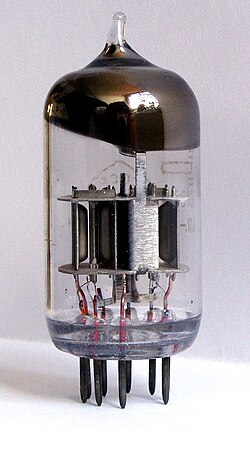
In 1945, ENIAC and its 18000 vaccuum tubes was the first turing complete machine.
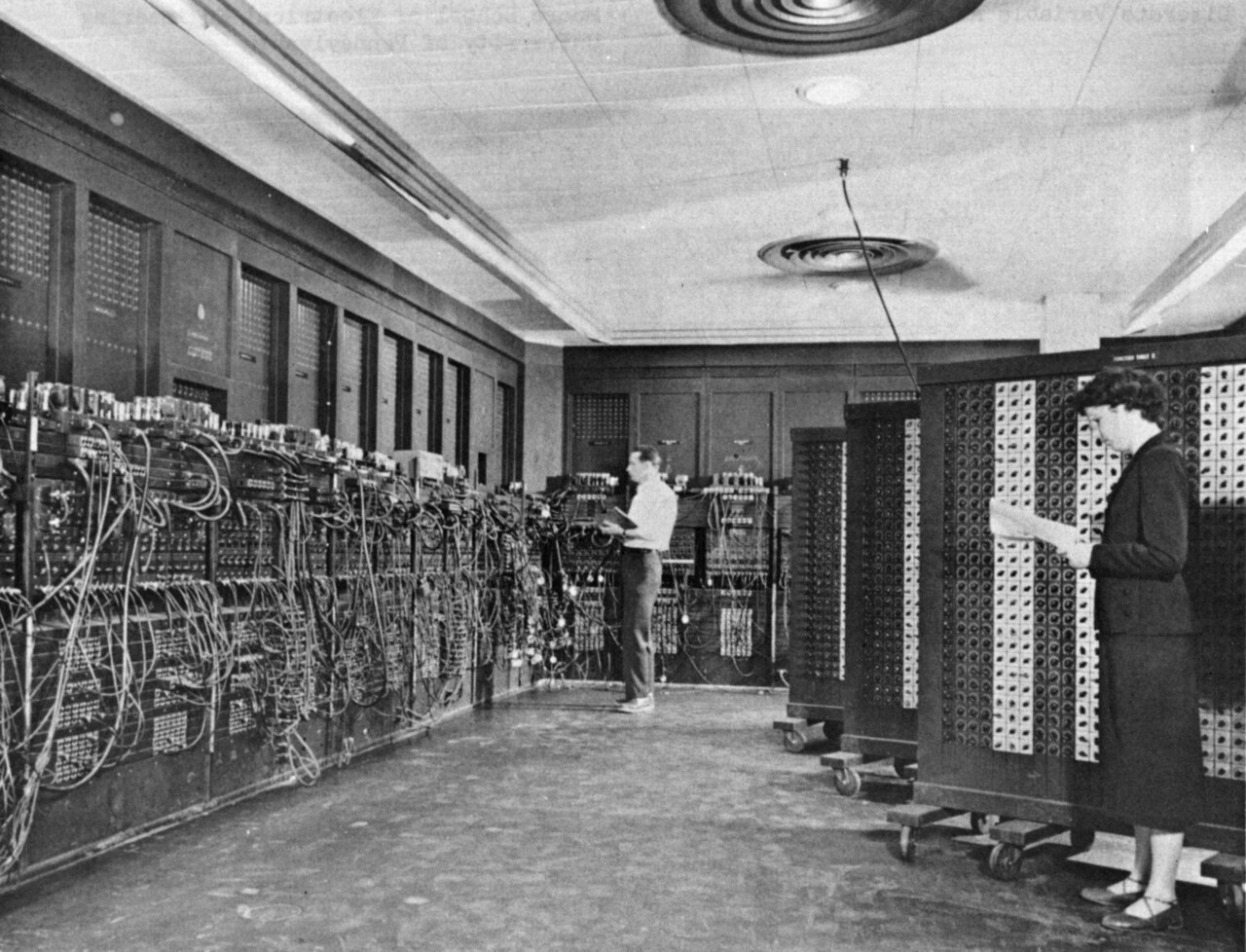
If the data were provided on punch cards, why can’t we imagine providing the instrutions themselves ? After all, it is already a card of papers with instructions for the jumpers.
Until 1954, programmers were programming directly in binary format on punching cards. But they had mnemonics routines.
As the vaccuum tubes were replaced by transistors, the heart of the computer went from a huge room to smaller than your hand. Those "processor" would be smart enough to have multiple instructions. You would provide them a serie of cards with the instruction to follow, then the data. Those instructions are the "assembly" of the processor.
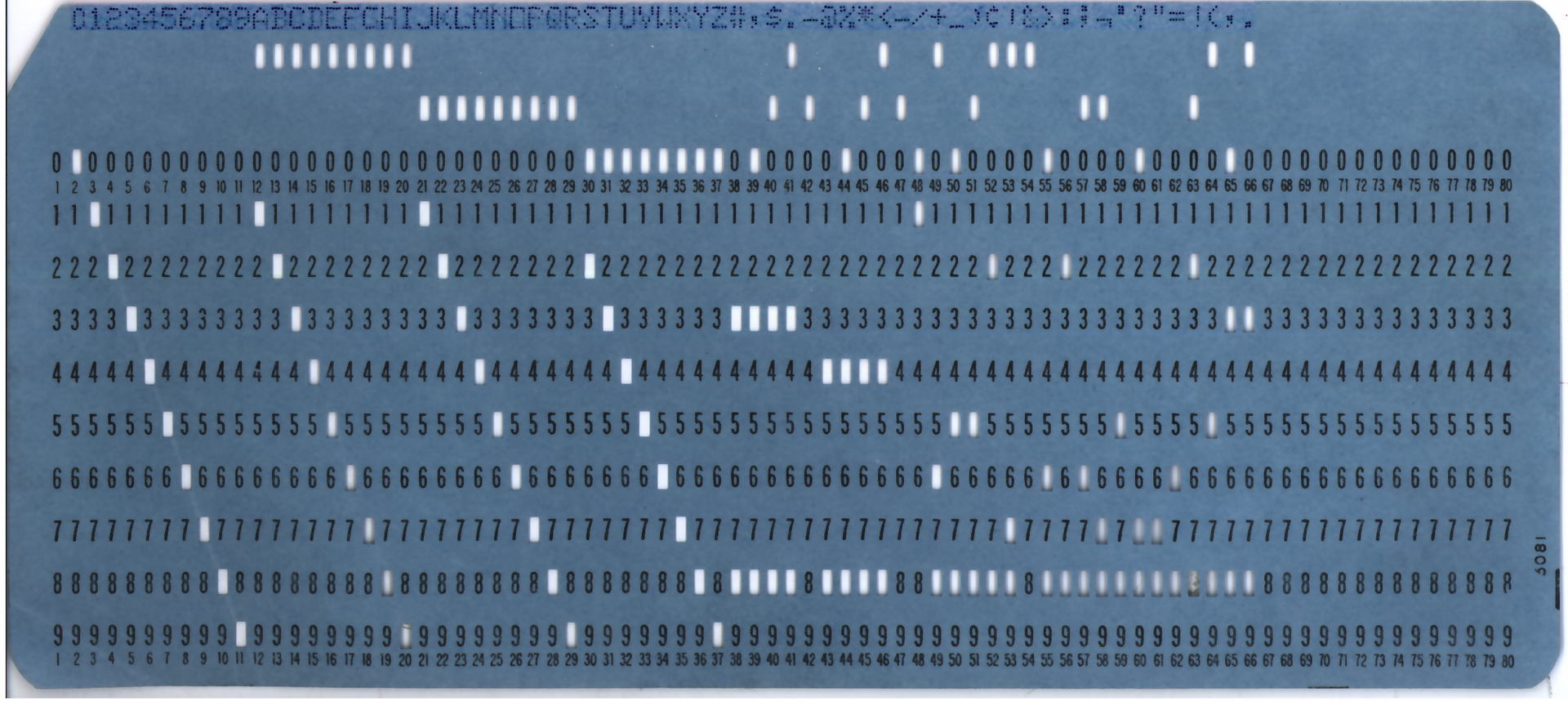
A "software" was then a deck of punched cards that needed to be entered in the right order. But the deck could be data too, like a thesis.
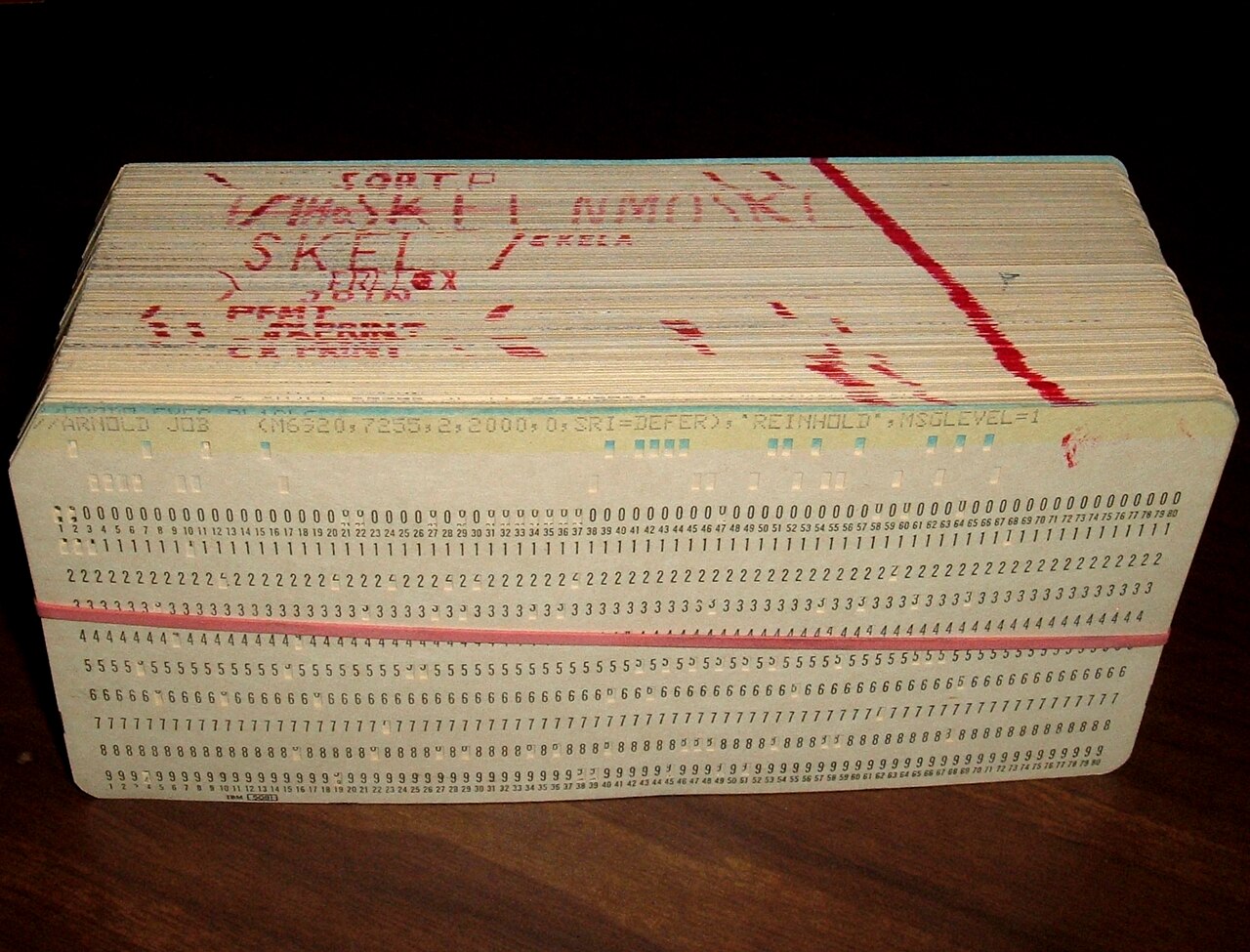
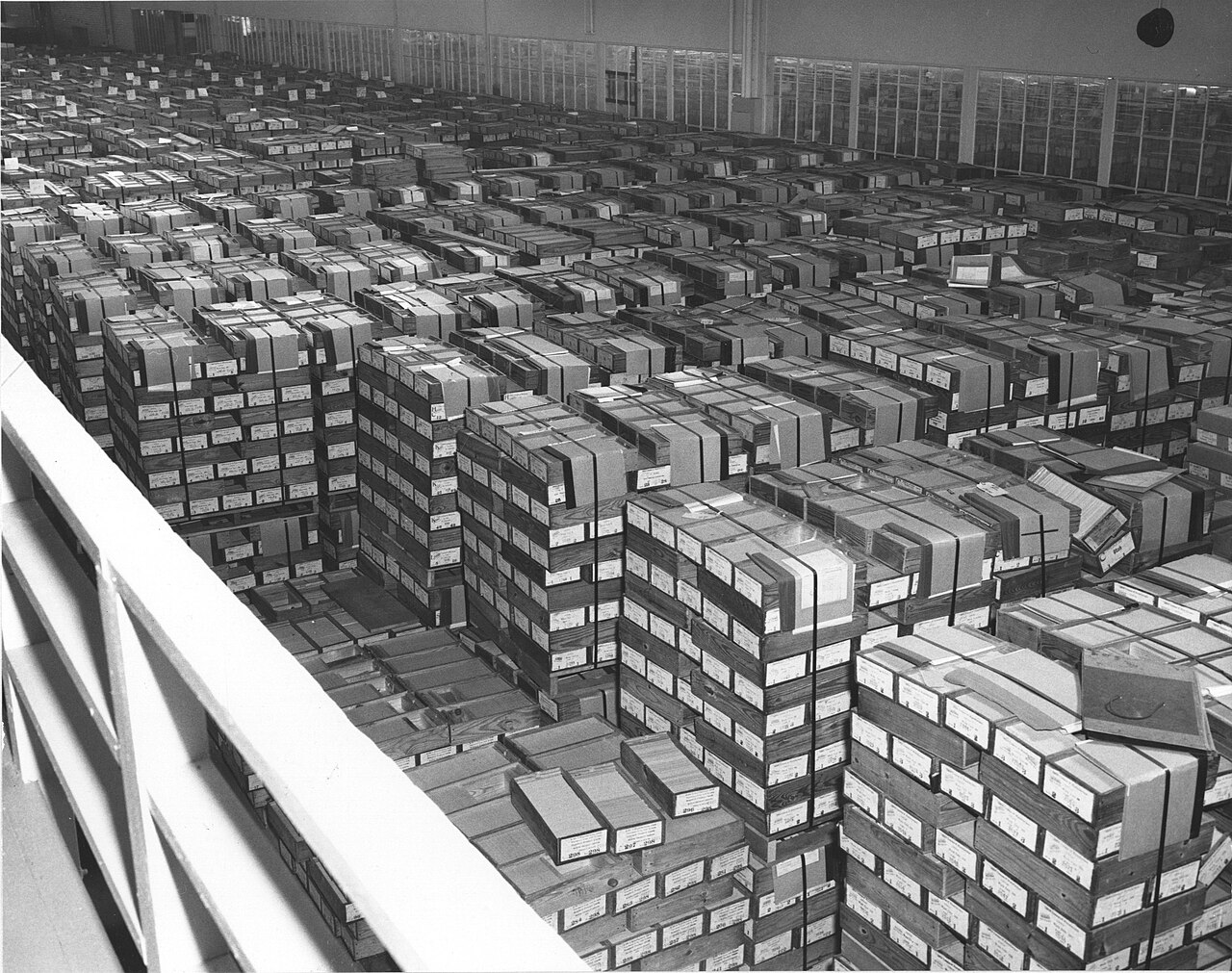
What is really important to understand is that there was no hard distinction between "software" and "user data". Every software was mostly custom. Nobody ever thought about selling it of preventing other from copying it. Every software was done for one particular computer.
It’s a bit like configuring a washing machine. You don’t sell the fact that button speed must be on "slow" and button temperature on "30°C" to wash wool. That’s just how you use the tool.
Of course, it is hard to think about holes in a piece of paper. Scientists invented formula to write their program. They could then use a formula translator to convert their software to punched cards. That part of the job could even be delegated to an operator who didn’t need to understand the program.
Of course, someone soon asked if we could not write a software that would automatically convert those formula. It was FORTRAN, the FORmula TRANslator.